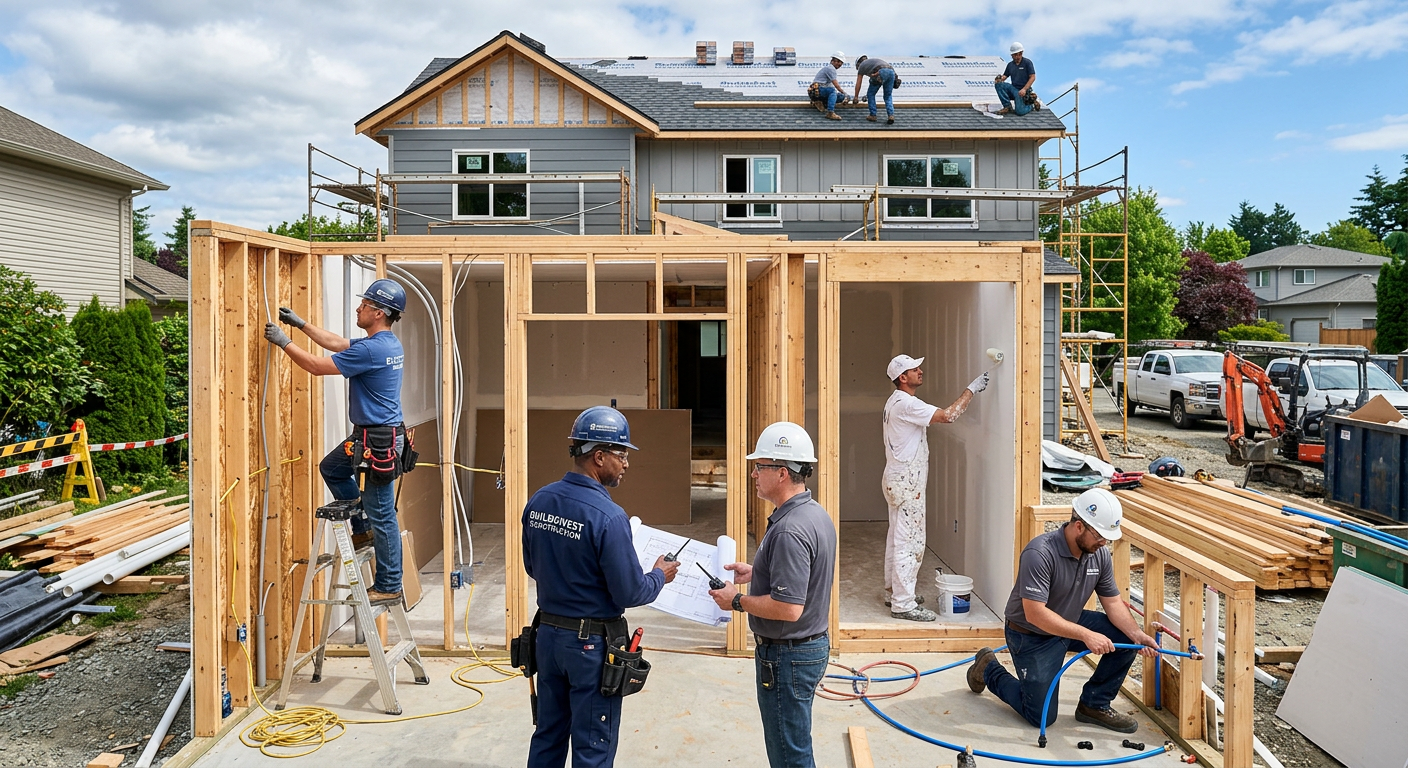
Every real estate investor has a story about the contractor who disappeared mid-project, the handyman who doubled the price halfway through, or the electrician whose “minor repair” became a major headache. These stories are so common because finding reliable contractors is one of the hardest parts of the real estate business.
The investors who scale are not necessarily better at finding deals. They are better at building teams. They have a go-to general contractor, a reliable handyman, an honest plumber, and an electrician who answers the phone. When a deal closes, they know exactly who to call.
This article shows you how to use Google Maps data extraction to build a contractor network in any market. Whether you are investing locally or expanding to a new city, this system helps you find, vet, and build relationships with the service providers who make your deals profitable.
Why contractor relationships make or break investors
Your contractor network affects every aspect of your real estate business:
Deal analysis accuracy:
Reliable contractors give accurate repair estimates before you make offers. Bad contractors underestimate costs, and you discover the real numbers after you own the property.
Project timelines:
Good contractors finish on schedule. Bad contractors stretch projects from 4 weeks to 4 months, eating your holding costs and delaying your next deal.
Profit margins:
The difference between a contractor who charges market rate and one who pads every invoice can be $10,000+ on a single rehab.
Deal flow:
Contractors know about properties before they hit the market. They work in houses every day. They hear about divorces, deaths, and financial distress. A contractor who trusts you sends you deals.
Scalability:
You cannot do more deals if you cannot handle more rehabs. A deep contractor bench lets you scale volume without sacrificing quality.
The Google Maps advantage for finding contractors
Google Maps is the most current directory of local contractors available. Here is why it works so well:
Active contractors maintain profiles:
Contractors who want work keep their Google Business Profiles updated. They add photos of completed projects. They collect reviews from satisfied customers. An active profile signals an active business.
Reviews reveal quality:
Contractor reviews on Google Maps are detailed. Customers describe the work performed, the timeline, the communication, and the final price. This is vetting data you cannot find in a phone book.
Photos show capabilities:
Contractors who take pride in their work post photos of completed projects. You can see the quality of their finish work, the complexity of jobs they handle, and their attention to detail.
Local focus:
Google Maps prioritizes local contractors. You find the small operators who do great work but do not advertise. These are often the best value.
What types of contractors to find
Build a complete team by extracting these contractor categories:
Core rehab team
| Contractor Type | Role | When You Need Them |
|---|---|---|
| General contractor | Project management, major rehabs | Full gut jobs, structural work |
| Handyman | Small repairs, punch lists | Light rehabs, tenant turnovers |
| Electrician | Electrical work | Panel upgrades, rewiring, additions |
| Plumber | Plumbing work | Pipe replacement, fixture installs |
| HVAC technician | Heating and cooling | System replacement, repairs |
| Roofer | Roof work | Replacements, repairs, inspections |
| Painter | Interior/exterior painting | Every rehab, cosmetic updates |
| Flooring installer | Flooring | Carpet, hardwood, tile, LVP |
| Cabinet/countertop | Kitchens and baths | Major kitchen/bath updates |
Specialized services
| Service Type | Role | When You Need Them |
|---|---|---|
| Foundation repair | Structural issues | Cracks, settling, water damage |
| Waterproofing | Basement issues | Leaks, moisture, mold prevention |
| Pest control | Infestations | Termites, rodents, insects |
| Junk removal | Cleanouts | Pre-rehab clearing, tenant move-outs |
| Dumpster service | Waste removal | Demolition, major cleanouts |
| Locksmith | Security | Rekeying, lock changes |
| Cleaning service | Final cleaning | Pre-listing, pre-tenant |
| Landscaping | Curb appeal | Exterior cleanup, maintenance |
| Appliance repair | Equipment fixes | Refrigerators, stoves, washers |
| Garage door repair | Entry systems | Broken springs, opener issues |
Finding contractors on Google Maps
The extraction strategy varies by contractor type. Use specific search terms to find the right professionals.
Search queries by trade
| Trade | Primary Search | Secondary Searches |
|---|---|---|
| General contractor | ”general contractor [city]" | "home remodeling [city]”, “renovation contractor [city]“ |
| Handyman | ”handyman [city]" | "home repair [city]”, “property maintenance [city]“ |
| Electrician | ”electrician [city]" | "electrical contractor [city]”, “residential electrician [city]“ |
| Plumber | ”plumber [city]" | "plumbing contractor [city]”, “emergency plumber [city]“ |
| HVAC | ”HVAC contractor [city]" | "air conditioning repair [city]”, “heating contractor [city]“ |
| Roofer | ”roofing contractor [city]" | "roof repair [city]”, “residential roofer [city]“ |
| Painter | ”house painter [city]" | "interior painter [city]”, “exterior painting [city]“ |
| Flooring | ”flooring contractor [city]" | "hardwood flooring [city]”, “tile installer [city]” |
Run each search in your target market. You will typically find 20-100 contractors per trade in metro areas.
Filtering for quality indicators
Once you have your extraction, filter for the best prospects:
Review count thresholds:
- 50+ reviews: Established, active contractor
- 20-49 reviews: Growing business, worth considering
- Under 20 reviews: New or inactive, higher risk
Rating minimums:
- 4.5+ stars: Excellent track record
- 4.0-4.4 stars: Good, but read reviews for context
- Under 4.0 stars: Red flag, investigate carefully
Review recency:
Prioritize contractors with reviews from the last 3 months. Stale reviews suggest inactive businesses.
Photo quality:
Contractors who post photos of completed work take pride in their craft. Blurry photos or no photos are warning signs.
Building your contractor database
Organize your extracted data for quick access when you need work done.
Essential data fields
| Field | Purpose | How to Use |
|---|---|---|
| Company name | Identification | Reference when calling |
| Contact name | Personalization | Build relationship with owner or manager |
| Phone number | Emergency contact | Call for urgent repairs |
| Email address | Quotes and scheduling | Send project details |
| Website | Portfolio review | Check past work examples |
| Services listed | Specialization | Match to project needs |
| Review count | Reputation gauge | Prioritize established contractors |
| Rating | Quality indicator | Filter for 4.0+ stars |
| Years in business | Experience level | Prefer 3+ years |
| Areas served | Coverage | Confirm they work in your target areas |
Categorization system
Create categories for quick contractor matching:
By response speed (after you test them):
- Tier 1: Answers immediately, available within 24 hours
- Tier 2: Responds same day, available within a week
- Tier 3: Slow response, use for non-urgent work only
By price level (after getting quotes):
- Premium: High quality, high price (use for retail flips)
- Mid-market: Good quality, fair price (standard rehabs)
- Budget: Acceptable quality, low price (rental turnovers)
By project size:
- Major rehabs: $20k+ projects
- Medium jobs: $5k-$20k projects
- Small repairs: Under $5k projects
Vetting contractors: The testing process
Extraction finds contractors. Vetting determines which ones you actually hire. Never hire based on Google Maps data alone.
Step 1: Initial phone screen
Call and ask these questions:
“Hi, I am a real estate investor looking for a [trade] for a project in [neighborhood]. Are you taking new work?”
Listen for:
- Professional phone manner
- Willingness to discuss your project
- Questions about scope and timeline
- Realistic availability
Red flags:
- Immediate availability (might mean no work for a reason)
- Reluctance to discuss details
- Pressure to commit without seeing the job
- No license or insurance when asked
Step 2: License and insurance verification
Ask for:
- State contractor license number
- General liability insurance certificate
- Workers compensation insurance (if they have employees)
Verify the license with your state contractor board. Unlicensed contractors save money until something goes wrong. Then you are liable.
Step 3: Reference checks
Ask for 3 recent references from similar projects. Call them:
“Hi, I am considering hiring [Contractor] for a [project type]. Can you tell me about your experience working with them?”
Questions to ask:
- Did they finish on time?
- Did they stay on budget?
- How was their communication?
- Would you hire them again?
- Any problems or surprises?
Step 4: Test project
Never start with a major rehab. Give new contractors a small test project:
| Trade | Test Project | Budget |
|---|---|---|
| General contractor | Bathroom refresh or kitchen cosmetic update | $5,000-$10,000 |
| Handyman | Punch list on a rental turnover | $500-$1,500 |
| Electrician | Add outlets or light fixtures | $500-$1,000 |
| Plumber | Replace faucets or fix leaks | $300-$800 |
| Painter | One room interior | $500-$1,000 |
| Flooring | One room flooring install | $1,000-$2,500 |
Evaluate them on:
- Communication (do they confirm appointments, provide updates?)
- Timeliness (do they show up when promised?)
- Quality (does the work look professional?)
- Cleanup (do they leave the site clean?)
- Billing (is the final invoice what they quoted?)
Step 5: Build the relationship
Contractors who pass the test become part of your team. Nurture these relationships:
Pay promptly:
Nothing builds contractor loyalty faster than fast payment. Pay within 24-48 hours of completion. They will prioritize your calls over slow-paying customers.
Provide clear scope:
Vague instructions create change orders and disputes. Provide detailed written scope, photos, and expectations upfront.
Respect their time:
Show up for appointments on time. Have the property accessible. Do not call with “emergencies” that could have been planned.
Give consistent work:
Contractors prefer steady customers over one-off jobs. If you can provide regular work, you get priority scheduling and often better pricing.
Refer them business:
When you meet other investors, recommend your good contractors. They will remember and prioritize your projects.
Expanding to new markets
One of the biggest challenges for scaling investors is finding contractors in new markets. Google Maps extraction solves this.
The 30-day market entry plan
Week 1: Extract all trades
Run Google Maps searches for every contractor type you need in the new market. Extract 20-50 contractors per trade.
Week 2: Initial vetting
Call each contractor. Screen for availability, licensing, and professionalism. Narrow to 5-10 per trade.
Week 3: Test projects
Assign small test projects to your top 3 candidates per trade. Evaluate results.
Week 4: Build the team
Select your primary and backup contractor for each trade. Document contact info, pricing, and specialties.
Result: In 30 days, you have a functional contractor team in a new market without ever visiting in person.
Market-specific considerations
Licensing requirements:
Every state has different contractor licensing rules. Research requirements before vetting. Some trades require state licenses. Others are locally regulated.
Union vs. non-union:
In some markets, certain trades are unionized. Union contractors cost more but may offer better quality and reliability. Know the market norms.
Regional specialties:
Markets have unique needs. In flood-prone areas, you need waterproofing specialists. In cold climates, you need heating experts. In historic districts, you need restoration specialists. Adjust your extraction strategy accordingly.
Cost comparison: Finding contractors
Let us compare methods for building a contractor network:
Referrals from other investors:
- Cost: Free
- Quality: High (vetted by peers)
- Speed: Slow (depends on networking)
- Scale: Limited (only know so many people)
Angi, HomeAdvisor, Thumbtack:
- Cost: Free to browse, lead fees for contact
- Quality: Mixed (anyone can sign up)
- Speed: Medium
- Scale: Good coverage
- Downside: Contractors pay for leads, prices often inflated
Driving for contractors:
- Cost: Gas and time
- Quality: Variable
- Speed: Very slow
- Scale: Limited to areas you drive
Google Maps extraction:
- Cost: $79 one-time
- Quality: High (reviews, photos, current data)
- Speed: Fast (extract hundreds in hours)
- Scale: Unlimited
For investors building teams in multiple markets, Google Maps extraction is the only scalable solution.
Common mistakes when hiring contractors
Mistake 1: Hiring based on price alone
The cheapest bid often becomes the most expensive project. Poor work requires rework. Delays cost holding costs. Hire for value, not price.
Mistake 2: Skipping the test project
A contractor with great reviews might be wrong for your specific needs. Always test with a small project before committing to a major rehab.
Mistake 3: Not checking insurance
If an uninsured worker gets hurt on your property, you are liable. Always verify insurance certificates.
Mistake 4: Paying upfront
Never pay more than 25% upfront. Structure payments tied to milestones. Hold 10% until final punch list is complete.
Mistake 5: Having no backup
Your primary contractor will get busy, sick, or flake. Always have a backup for critical trades. Extract more contractors than you think you need.
Getting started today
If you need to build or expand your contractor network, here is your action plan:
-
Extract contractors from Google Maps. Run searches for each trade in your target market.
-
Filter for quality. Prioritize contractors with 20+ reviews and 4.0+ stars.
-
Call and screen. Verify availability, licensing, and professionalism.
-
Assign test projects. Start small to evaluate quality and reliability.
-
Build your A-team. Select primary and backup contractors for each trade.
-
Nurture relationships. Pay promptly, communicate clearly, provide consistent work.
Within 30 days, you will have a contractor network that can handle any project you throw at them.
The bottom line
Real estate investing is a team sport. Your contractor network determines your deal quality, your profit margins, and your ability to scale.
Google Maps extraction gives you the most current, comprehensive contractor database available. For a one-time cost of $79, you can build a team in any market without relying on referrals, driving around, or paying lead generation fees.
The investors who win are not the ones who know the most about real estate. They are the ones who know the best contractors.
MapGopher extracts unlimited Google Maps leads with automatic email discovery for a one-time $79 purchase. Build your contractor network in any market without monthly fees or per-lead charges.