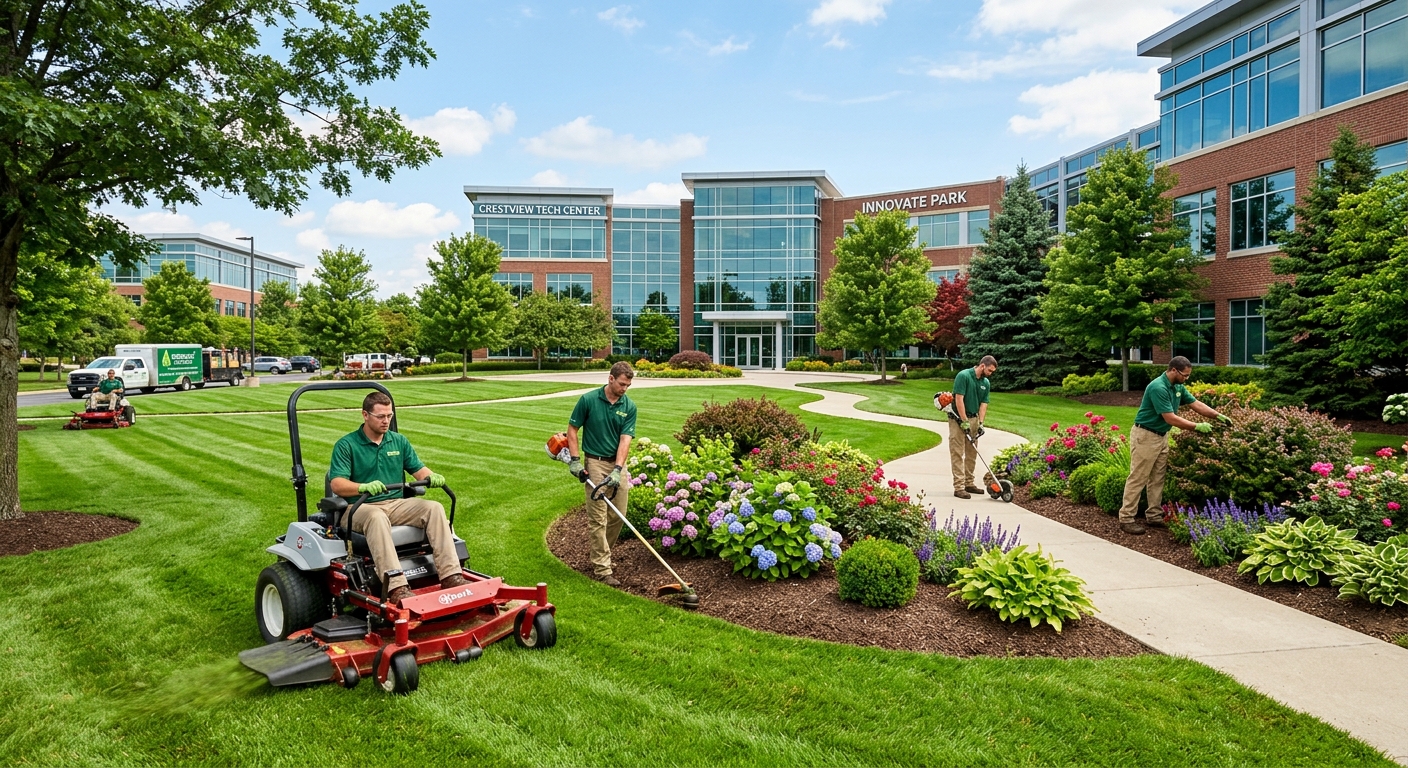
Landscaping is a seasonal, competitive business. You need a full pipeline of maintenance contracts to keep crews busy and revenue steady through the season. Relying on word-of-mouth and drive-by estimates leaves money on the table and creates feast-or-famine cash flow.
The best landscaping clients are not homeowners posting one-time projects on Facebook. They are commercial properties with ongoing maintenance needs, HOAs managing common areas, and property managers overseeing multiple sites. These clients pay monthly, sign annual contracts, and do not micromanage your work.
This article shows you how to find landscaping clients using Google Maps data. You will identify properties that need regular service, get decision-maker contact information, and reach out with professional proposals. The cost is $79 one time. No lead fees. No bidding against competitors.
Why commercial landscaping beats residential
Residential landscaping has three problems that make scaling difficult:
Problem 1: One-time projects
Homeowners want a patio installed or trees trimmed. Once the job is done, they are gone. You are constantly hunting for new customers.
Problem 2: Price sensitivity
Homeowners compare three quotes and pick the cheapest. They do not understand the difference between professional maintenance and a kid with a mower.
Problem 3: Seasonal inconsistency
Residential customers cancel service during winter or when budgets get tight. Commercial contracts run year-round or seasonally with guaranteed renewal.
Commercial clients sign maintenance agreements. They pay automatically. They value professional appearance because it affects their business. One commercial contract often equals ten residential customers in revenue.
What makes a qualified landscaping prospect
Not every property needs professional landscaping. You want clients with specific characteristics that indicate ongoing maintenance needs and budget.
High-priority targets:
- Property management companies (manage multiple properties, need consistent service)
- Homeowner associations (common areas, annual budgets, professional requirements)
- Retail shopping centers (curb appeal affects foot traffic, regular maintenance needed)
- Office parks and business complexes (professional appearance matters)
- Apartment complexes (landscaping affects tenant retention)
- Medical facilities (appearance affects patient perception)
- Restaurants with outdoor seating (patio maintenance, seasonal needs)
Medium-priority targets:
- Hotels and hospitality (landscaping affects reviews and bookings)
- Churches and religious facilities (grounds maintenance, event preparation)
- Schools and daycares (safety requirements, regular upkeep)
- Funeral homes (immaculate grounds are essential)
Qualifying indicators:
- Large maintained grounds visible on Google Maps satellite view
- Professional appearance in photos (indicates they invest in property)
- Multiple locations (property management companies)
- Recent reviews mentioning cleanliness or appearance
- High-end businesses (law firms, medical practices, financial services)
Finding landscaping clients on Google Maps
The search strategy targets property types and businesses that maintain professional grounds. You want decision-makers who control landscaping budgets.
Search queries for commercial landscaping
| Search Query | Client Type | Contract Value |
|---|---|---|
| ”property management [city]“ | Multiple properties, recurring needs | High |
| ”apartment complex [city]“ | Large grounds, tenant retention focus | High |
| ”shopping center [city]“ | Curb appeal critical, seasonal contracts | High |
| ”office park [city]“ | Professional maintenance required | Medium-High |
| ”homeowners association [city]“ | Common areas, annual budgets | Medium-High |
| ”condo association [city]“ | Shared grounds, professional requirements | Medium-High |
| ”medical office [city]“ | Appearance affects patient perception | Medium |
| ”hotel [city]“ | Guest experience, review impact | Medium |
| ”restaurant [city]“ | Patio maintenance, curb appeal | Medium |
| ”church [city]“ | Event preparation, community image | Medium |
| ”funeral home [city]“ | Immaculate grounds essential | Medium |
| ”daycare [city]“ | Safety requirements, parent perception | Medium |
Run each search in your service area. Extract results and filter for properties with visible grounds maintenance needs.
Identifying high-value properties
Use Google Maps features to qualify prospects before contacting:
Satellite view analysis:
Switch to satellite view to assess property size and landscaping complexity. Look for:
- Large lawns and green spaces
- Mature trees requiring maintenance
- Flower beds and planting areas
- Parking lot islands with landscaping
- Irrigation systems visible
Street view evaluation:
Check the current condition of grounds:
- Overgrown areas indicate need for service
- Well-maintained properties may have contracts up for renewal
- Seasonal photos show maintenance patterns
Photo reviews:
Customer photos often show outdoor areas. Assess landscaping quality and maintenance level. Properties with mediocre landscaping are opportunities.
Building your landscaping prospect database
Organize extracted data for efficient route planning and targeted outreach.
Essential data fields
| Field | Purpose | How to Use It |
|---|---|---|
| Property/business name | Identification | Personalize outreach |
| Address | Route planning | Cluster by neighborhood |
| Contact person | Decision-maker | Ask for property manager |
| Phone number | Direct contact | Primary outreach method |
| Email address | Proposals | Send professional quotes |
| Property type | Service planning | Tailor maintenance plans |
| Estimated size | Pricing | Calculate from satellite view |
| Current condition | Pitch angle | Reference in proposal |
Segmenting by service type
Create categories for targeted proposals:
By maintenance need:
- Lawn care only (mowing, edging, fertilization)
- Full maintenance (lawn, beds, trimming, seasonal color)
- Enhancement projects (installation, renovation, hardscaping)
- Snow removal (seasonal add-on for northern climates)
By property size:
- Small: Under 1 acre (solo operator or small crew)
- Medium: 1-5 acres (crew of 2-3)
- Large: 5+ acres (multiple crews, specialized equipment)
By contract type:
- Annual maintenance agreements (priority targets)
- Seasonal contracts (spring/fall cleanup)
- Project-based (installations, renovations)
- HOA common areas (multi-year contracts)
The landscaping outreach script
Your approach must be professional and consultative. Property managers are busy and skeptical of vendors.
The initial call
“Hi, this is [Your name] from [Company]. We specialize in commercial landscape maintenance for [property types] in [city]. I noticed your property on [street] and wanted to introduce our services. Are you the person who handles the landscaping decisions, or should I speak with someone else?”
If they have a service:
“That is good to hear that you are maintaining the grounds. Many property managers I work with are satisfied with their current service but like to have a backup option or comparison pricing for budget planning. Would you be open to a complimentary site visit and proposal for your records?”
If they handle it in-house:
“That makes sense for smaller properties. As you grow or as maintenance demands increase, professional service often becomes more cost-effective than managing crews and equipment. I would be happy to give you a quote for comparison. Would a brief site visit work this week?”
The site visit and proposal
Professional proposals win commercial contracts. Include these elements:
Site assessment:
- Property measurements from satellite or on-site
- Current condition notes and photos
- Specific maintenance requirements identified
- Seasonal considerations
Scope of work:
- Weekly/bi-weekly maintenance details
- Seasonal services (aeration, overseeding, cleanup)
- Bed maintenance and weed control
- Tree and shrub pruning schedule
- Annual color program
Pricing:
- Monthly maintenance fee
- Seasonal adjustment explanation
- Additional service rates
- Annual contract terms and discounts
Pricing strategies for commercial landscaping
Commercial pricing reflects the value of consistent, professional service.
Pricing models
Per visit pricing:
- Small properties (under 1 acre): $75-150 per visit
- Medium properties (1-3 acres): $200-400 per visit
- Large properties (3+ acres): $500+ per visit
Monthly contracts:
- Include specified number of visits per month
- Bundle seasonal services
- Offer 5-10% discount for annual commitment
- Automatic renewal clauses
Seasonal contracts:
- Spring cleanup and summer maintenance
- Fall cleanup and winter prep
- Snow removal (additional seasonal contract)
Sample commercial proposals
| Property Type | Size | Services | Monthly Price |
|---|---|---|---|
| Office park | 3 acres | Mowing, bed maintenance, seasonal color | $1,800 |
| Apartment complex | 5 acres | Full maintenance, tree care, snow removal | $3,200 |
| Retail center | 2 acres | Lawn care, parking islands, seasonal flowers | $1,400 |
| HOA common areas | 4 acres | Mowing, trimming, irrigation management | $2,100 |
| Medical office | 1 acre | Professional maintenance, seasonal rotations | $950 |
Real-world example: Growing a landscaping business
A landscaping company in Charlotte used this system to expand their commercial portfolio.
Month 1: Extracted 250 property management companies, HOAs, and retail centers from Google Maps
Month 2: Called 100 prospects, scheduled 15 site visits, submitted 12 proposals
Month 3: Closed 4 contracts: an apartment complex ($2,800/month), an office park ($1,600/month), an HOA ($1,200/month), and a retail center ($1,400/month)
Results after one season:
- 4 commercial contracts generating $7,000/month
- $42,000 in seasonal revenue from new clients
- 2 additional proposals pending for next season
- Route density improved with clustered properties
- Reduced marketing spend on residential leads
Total cost to acquire these clients: $79 for the scraper and 30 hours of prospecting and site visits.
Seasonal marketing strategies
Landscaping has natural seasonal rhythms. Align your outreach with decision-making timelines.
Spring campaign (February-March)
Target properties for annual contracts before the season starts:
“Spring is approaching, and now is the time to secure your landscape maintenance for the season. We are booking annual contracts for [city] properties and have availability for [X] more clients. Would you like a proposal for your [property type]?”
Fall cleanup campaign (September-October)
Offer fall services that lead to annual contracts:
“Fall cleanup season is here. We are scheduling leaf removal, winterization, and seasonal bed prep for [city] properties. Many of our clients started with fall service and transitioned to annual maintenance. Can I give you a quote?”
Snow removal add-on (October-November)
For northern climates, offer seasonal snow contracts:
“Winter is coming. We are booking commercial snow removal contracts for [city] businesses. Our seasonal contracts include priority service and guaranteed response times. Would you like pricing for your property?”
Building route density
Efficient routing increases profitability. Use your prospect database to build dense service areas.
Cluster strategy
Group prospects by neighborhood or business district:
- Offer 10% discounts for properties within 2 miles of existing clients
- Market heavily in areas where you already have presence
- Build crew assignments around geographic zones
Referral programs
Commercial clients know other property managers:
“We are looking to add 3-4 more properties in [neighborhood] this season to optimize our routes. Do you know any other property managers who might need landscaping services? We offer a free month of service for referrals that sign annual contracts.”
Common mistakes landscaping businesses make
Mistake 1: Underpricing commercial work
Commercial clients pay for reliability and professionalism, not just mowing. Price for profit, not to beat the competition.
Mistake 2: Neglecting route efficiency
Driving 30 minutes between jobs kills profitability. Use geographic clustering to minimize travel time.
Mistake 3: Inconsistent follow-up
Property managers plan budgets quarterly. Follow up consistently over time. The prospect who said no in January may sign in March.
Mistake 4: Generic proposals
Every property is different. Customize proposals based on site visits and specific needs. Generic bids get ignored.
Mistake 5: Ignoring winter revenue
Northern landscaping businesses struggle in winter. Offer snow removal, holiday decorating, or indoor plant maintenance to maintain cash flow.
Getting started today
If you want to build a commercial landscaping client base, here is your action plan:
-
Extract prospect data from Google Maps. Focus on property managers, HOAs, retail centers, and office parks.
-
Assess properties using satellite view. Estimate size and maintenance needs before contacting.
-
Build your initial list. Aim for 200-300 qualified commercial prospects.
-
Call 20 prospects daily. Focus on site visits, not phone sales.
-
Submit professional proposals. Include detailed scope, pricing, and terms.
-
Build route density. Cluster clients geographically for efficiency.
Within one season, you can build a portfolio of commercial contracts that provides steady, predictable revenue.
The bottom line
Commercial landscaping is the path to a stable, profitable business. Residential work fills gaps; commercial contracts build value. The properties in your service area are on Google Maps with contact information for decision-makers.
For a one-time investment of $79, you can extract unlimited leads, build a targeted prospect database, and start landing contracts that pay reliably month after month. The properties you find have grounds that need maintenance, budgets allocated for landscaping, and managers who value professional appearance.
Stop competing for one-time residential jobs. Start building relationships with commercial clients who sign annual contracts and pay premium rates for reliable service.
MapGopher extracts unlimited Google Maps leads with automatic email discovery for a one-time $79 purchase. Build your landscaping client list without monthly fees or per-lead charges.